
How can trainers and facilitators collaborate more effectively on a European level?
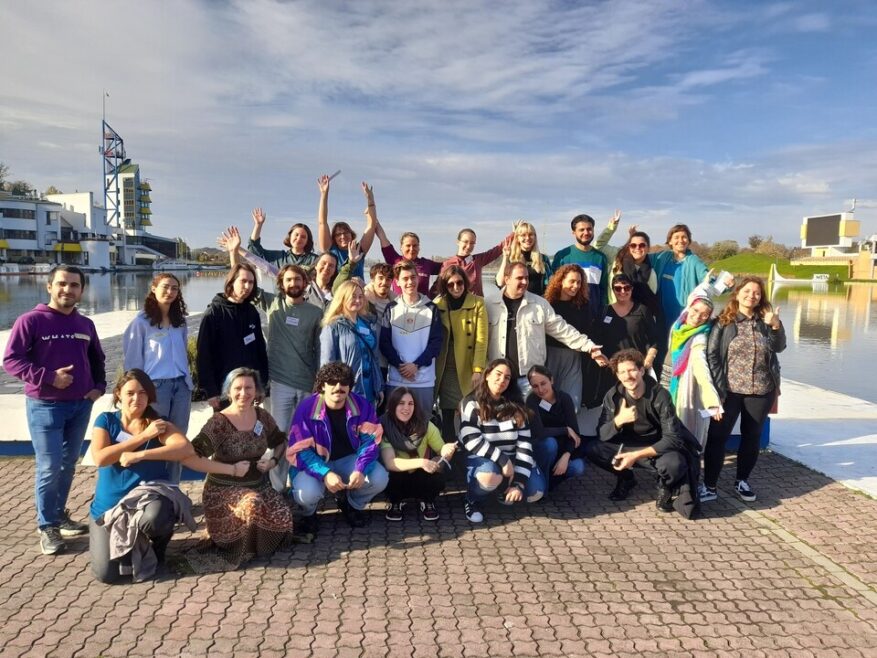
In October 2022 I attended the 7-day long training: Learning Lab(oratory) Pro about quality non-formal education in the digital world. The training was conducted by the Service Civil International team in Poznan, Poland and co-funded by European Union in the action Mobility of Youth Workers.
I heard about the training through a newsletter for NGOs in Serbia and I was impressed by the training agenda, the track record of organizers, and the fact that participants from 9 countries of Europe will attend.
Some days after I had sent my application I was chosen as part of the training group thanks to the involvement of VCV Serbia (The Volunteers’ Centre of Vojvodina).
At this training I participated in two capacities: as a self-employed digital transformation consultant (who delivers extensive trainings to companies) and as a non-profit founder / project manager (with a focus on job skills for youth).
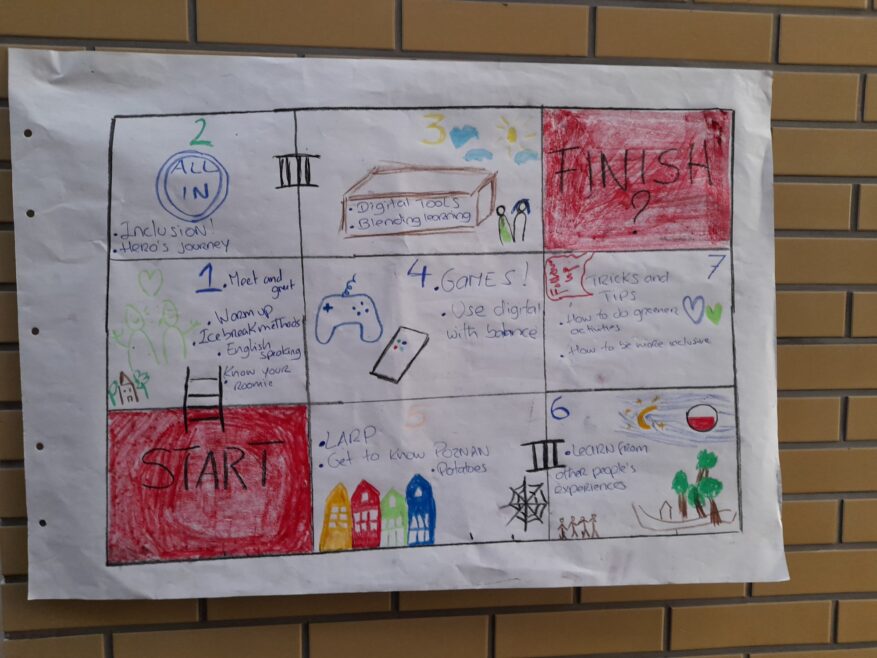
This team poster represents in a nutshell, what we have learned:
For me it has been amazing to meet other colleagues: facilitators, non-profit leaders and company employees in unconventional ways. The breakthroughs at Learning Lab Pro certainly inspired us for the next stage of our training carers.
For example, after the initial ”Meet & Greet” our group was presented with the list of 7 challenges called Mission (Im)possible which we had to solve in 40 minutes by using a collective intelligence of 30 people and organizing ourselves quickly. The challenge was real: How do you calculate the exact age of the entire group or the total number of languages that we speak so that you do not count some information twice or you do not forget something? How do you manage others or create value as an information gatherer / knowledge worker when we barely know each other?
This introduction exercise was a fantastic way to get to know other people and to bring results under pressure. Luckily, we completed the entire task as a team and we really met each other.
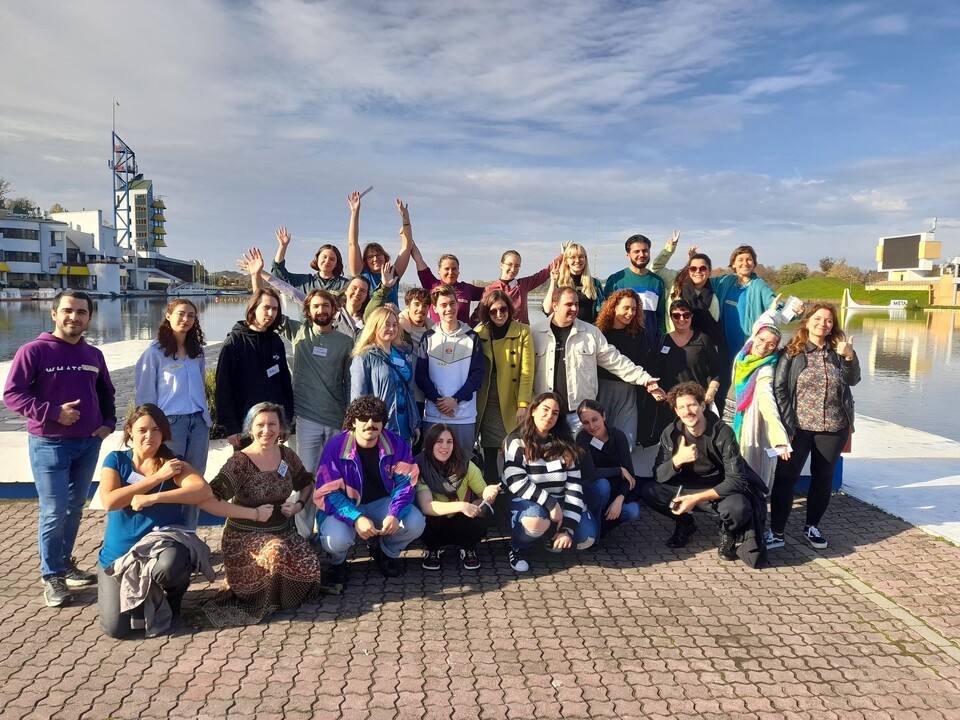
Our trainers Gośka Tur and Natalie Jivkova were a Polish-Bulgarian tandem with remarkable results in non-formal education and facilitation. Their team was also strengthened by the help of volunteers Elvira Amatuzzi from Italy and Maria Kozemko from the Ukraine.
During the second and the third day our trainers Gośka and Natalie gave us a background about the non-formal learning; which tools they found to be effective; and how inclusion and green topics are becoming an integral part of trainings at the European level.
It was fascinating to find out that all of us can be included because of some criteria or the other (nationality, economic status, gender, health, etc.). Plus, when we talk about the needs of people with fewer opportunities, the needs that we respond to are the needs that actually every human being has: to feel accepted and validated, to experience love, to have peace of mind, etc.
When it comes to the management of training, we saw different ways to organize groups and to bring out the message as facilitators. We could walk in groups of two in wonderful Poznan weather around Malta lake and find out about each other’s experience with non-formal education and European projects. Likewise, we had outdoor activities in circles and body movement games as energizers. Sometimes, we would work in smaller groups inside the training venue.
And we even conquered the dimension of time: the participants of the first Learning Lab training in Bulgaria in the summer of 2022 sent us the letters ”from the future” which we opened in October 2022. Certainly our favourite was the line from an anonymous fan, ”I bet you have a wonderful smile.” :D
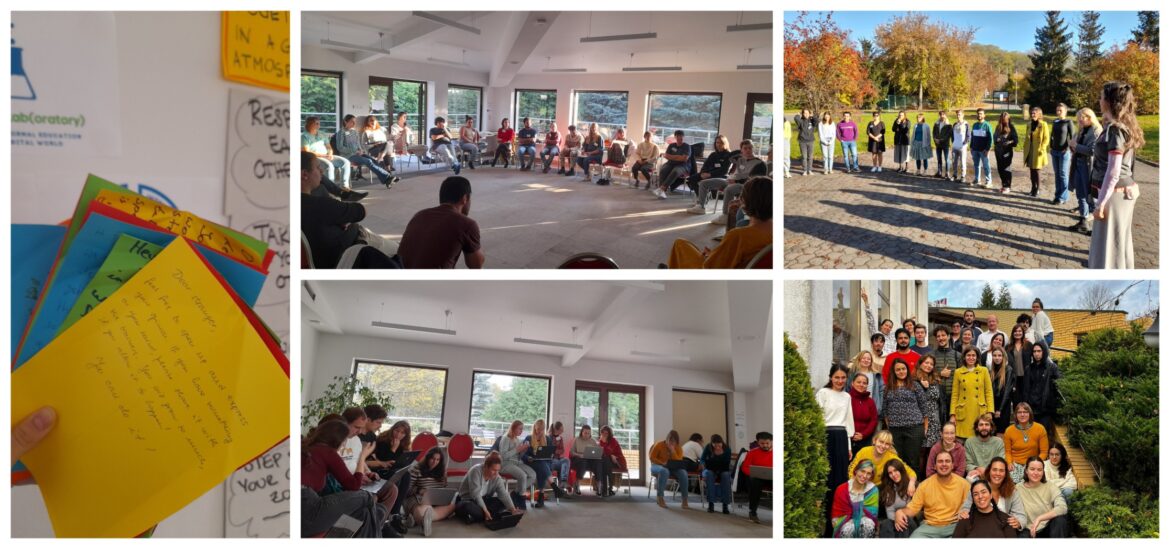
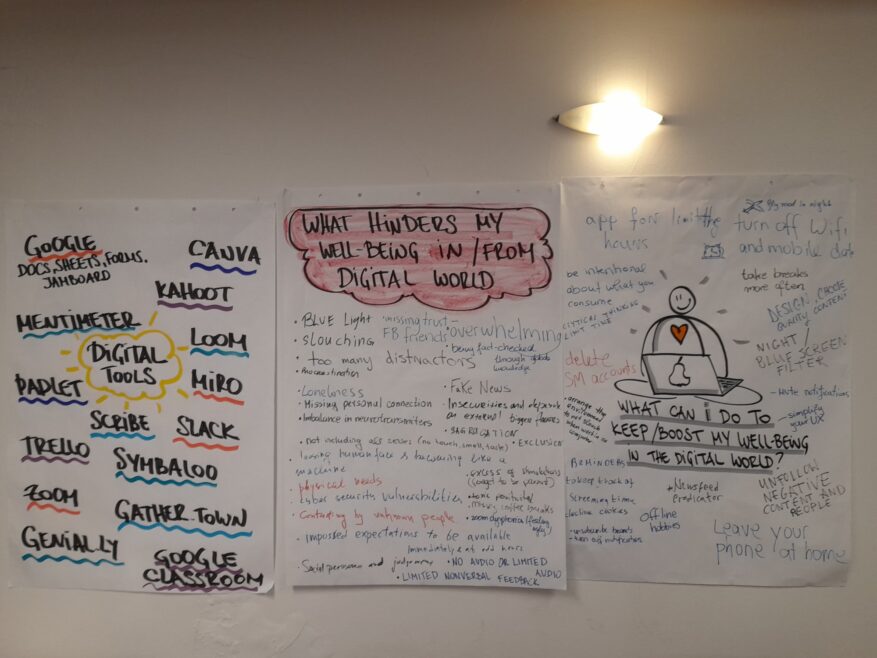
During the next days of training we tried diverse tools for group management, knowledge sharing and simulation. We also discussed how to take a break and detox from technologies so as to protect our well-being.
Once again, our diverse group proved: young people and trainers face a similar challenge no matter from which country of Europe they originate. We all questioned how to protect ourselves from too extensive screen time and how to find fun and relaxation in offline mode?
On the fifth day of the training we also experienced LARP, the live action role-play, where the entire group participated. The scenario was about a youngster who has a kind female friend and a mean male friend that portray good and evil choices.
Our group would choose between different situations as the main protagonist moves through kindergarten and school days, and later on adulthood and middle age. Each action we suggested had ”consequences” for those characters on the stage and members of their community and family, Likewise, each action impacted us in the audience, as well.
This was a powerful experience because I realized how role-play can be used in the non-formal learning. Plus, I experienced greater introspection towards me and more intense empathy towards others in the group.
In the final days of the training we experienced Poznan during free time in the evenings of Halloween and at All Saints’ Day, the national and family holiday in Poland.
During the daytime we also built further the Graphic with Ideas for Inclusion and Green projects. These items will be presented together with the Facilitation cards at the webinar on February 27 by our trainers Gośka and Natalie.
We certainly had amazing training insights. For me it was a brilliant experience to meet other facilitators and leaders who work in the field of non-formal education.
Each of us had the opportunity to share learning outcomes with their community. For example, the training in local youth organizations, the tailor-made video, the blog posts (like this one) and many other ways brought project results to a wider audience. Thesedissemination activities were also required by Erasmus+ donors so as to show tangibly the impact and performance metrics.
The training was a part of the ‘Learning Lab(oratory): quality non-formal education in the digital world’ project and co-funded by the European Union. You can find more information about the project here (https://poland.sci.ngo/en/project/learning-lab/).
I look forward to staying in touch with the Learning Lab(oratory) crew because we all will continue building capacities for Erasmus+ and other European grants. As time goes by, we can be helpful to each other and build partnerships together.
Thank you,
Milena


